
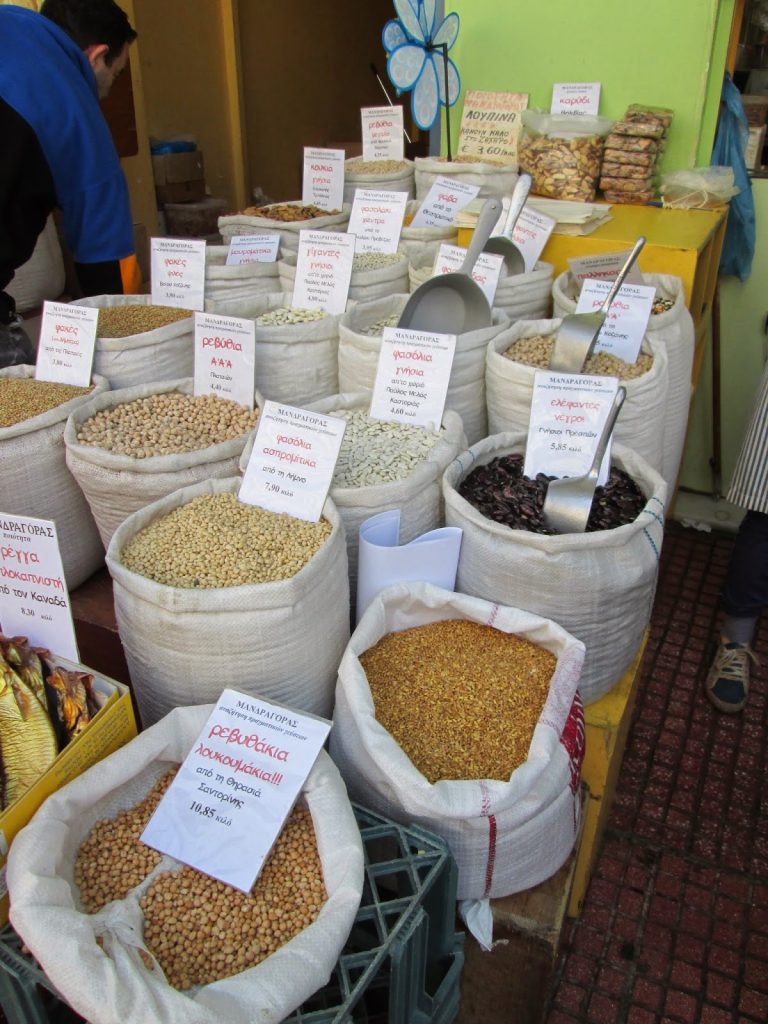
Eating plant-based foods and cooking healthy vegan recipes while traveling can be difficult. After all, the food in the grocery stores and markets around the world can be intimidating, and finding healthy vegan options at restaurants can be a bit of a treasure hunt. We’ve got a few tips for how to eat healthy, plant-based foods on the road while traveling the world. After all, we’ve been traveling full-time for almost four years, and we’ve picked up a few tips.
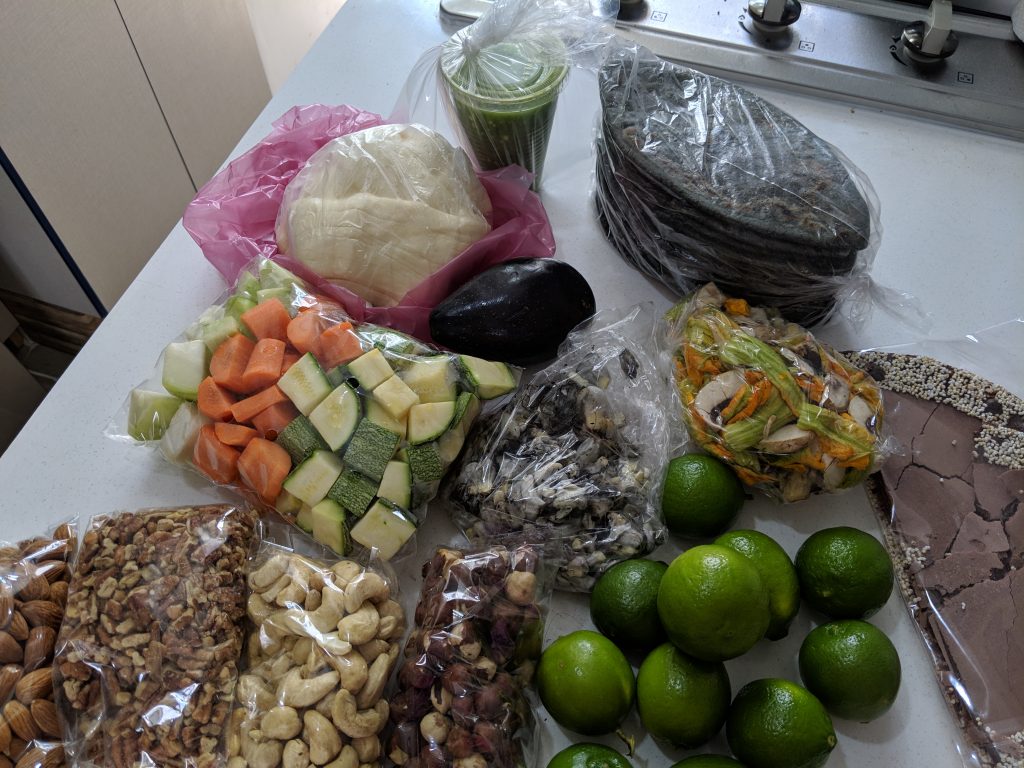
Just like at home, we have a staple list of vegan foods we get at the market, and these include the following items:
- Nuts
- Seeds
- Lentils
- Beans
- Spinach
- Whole-wheat breads
- Peanut butter
- Hummus
- Vegetables
- Potatoes
Your list probably looks very similar to this. We continue to buy this list around the world. The categories stay the same, but the actual items might be different. Instead of walnuts, we might get pinons. Instead of black beans, we might get cranberry beans.
Vegetables, Spices, Grains Around the World
As for vegetables, the items are probably the most drastically different here than anywhere on the list. While traveling, we find many different types of spinach, we eat more bok choy, and different cabbages find their way into our baskets.
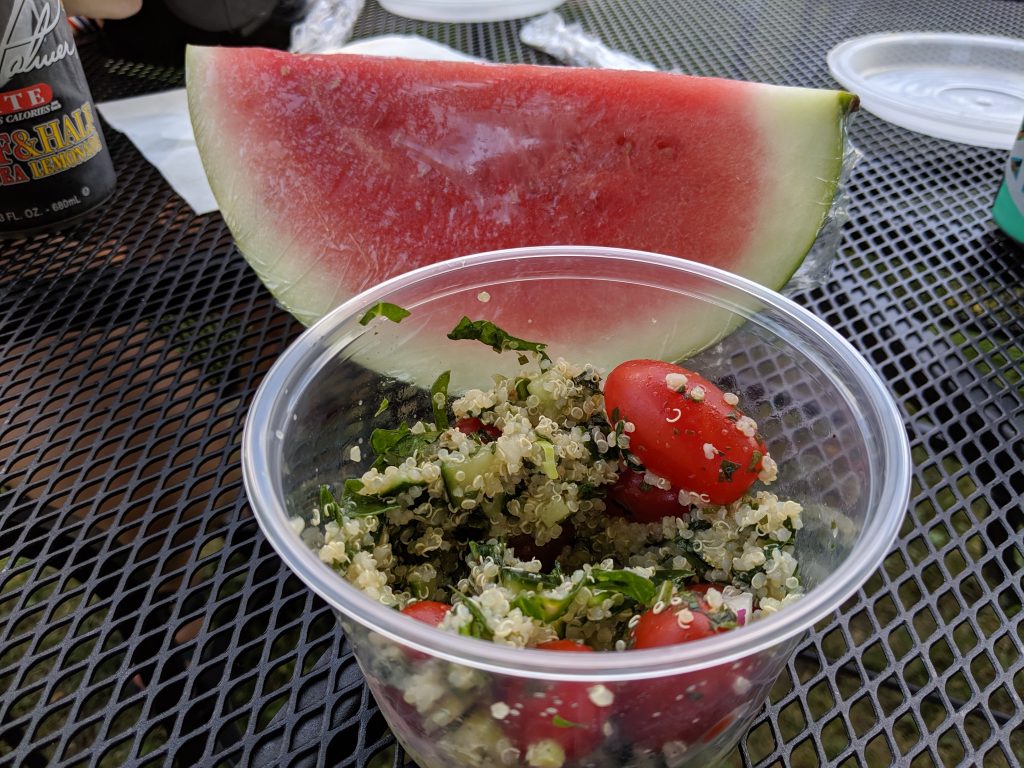
Grains might be the most fun item to shop in the local market. Bags of barley, quinoa, millet, and multi-grain rice seem easier to find elsewhere than at home. Canned beans differ too, but we always seem to find garbanzos (chickpeas), black beans and white (Cannellini) beans.
Thus, what we cook on the road tends to be the same things we cook at home. The main difference is the spices. We’ll pick up the local spices at the market and experiment; za’atar, herbes de provence, adobo, and lemongrass. It’s fun to mix and match and try new things. We fail often, but we find crazy new flavors too.
Cooking in Bad Kitchens Around the World
Cooking while traveling can be a challenge as well. Often we’re in AirBnbs where the kitchen utensils can be bad at best. Broken spatulas, dull knives and mismatched pots and lids frequently appear in kitchens. We’re very lucky to get a blender and a sharp knife, so we’ve learned to adapt on the go.

Here are some tips for cooking in AirBnbs with bad kitchens:
- If possible, buy produce cleaned and precut
- If you can’t find it fresh, check in the frozen, canned, and jarred sections
- Use Google translate to read labels
- You can often sharpen a knife on the back side of a stoneware plate
- Plan for one-pot meals, cooking the grain first and adding veggies on top to steam
Eating as a Vegan in Restaurants Around the World
At restaurants, we find our biggest challenge for finding good vegan foods. If we are looking for a place to sit down, we’ll use google to find vegan restaurants or any of the common vegan apps like HappyCow. But these actually don’t do very well. They may find us traditional restaurants that are often expensive, but they rarely find us the family run places we love.

If google hasn’t been helpful, we’ll head to an Asian-style place, a Mexican cafe or an Indian restaurant. At the Asian places, it can be hard to navigate what “vegan” is. The owners might think that the vegetable soup made with fish broth is vegan. Or they may think adding gelatin to a sauce is a vegan option too. At the Indian restaurants, dairy-based yogurts might slip into a curry.
We’ve learned to adapt and not be so concerned about whether every meal is truly vegan. After all, we’re doing our best to reduce our carbon footprint by eating vegan as much as we can. But if you’re strictly vegan, don’t be afraid to use your translator app to ask questions. Of, if you feel uncomfortable with the app, write down in the local language exactly what you’ll eat. So how would you do that if you don’t know the language?
- Ask your host at your AirBnb
- Ask the hotel owner
- Visit an English language school and ask
- Pay for an hour at iTalki and have them write it down for you
Finally, street food, which is some of the best food to eat while traveling, can be a real challenge. You might be able to interpret the sign for what the item is, but understanding the item’s ingredients can be a real bear. Instead, look around at the cook’s kitchen. What do you see? If you see animal parts, move on. If all you see is vegetable items, you are probably in a good spot. Although the vendors might not speak your language, there’s a good chance the younger adults will. You can ask them, too.

Chris Englert, the Walking Traveler, believes walking is the platform for life. Wanderlusting since the age of 5, she’s since traveled all 50 US states and 62 countries. Chris shares her love of walking while traveling via blogs, books, and presentations. A natural storyteller, she invites you along as she explores the world, one walk at a time.
Currently, Chris and her husband, Steve, travel the world, full-time as nomads, with just their two carry-ons. They’ve been traveling since May, 2021.