
Join us on this free walking tour of Geelong’s best city sites. Originally home to the Wadawurrung (also known as Wathaurong) Aboriginal people of the Kulin nation, Geelong grew via the discovery of gold and the growth of the wool industry.
You can still find the wool industry influence in the facades of many of the historic buildings throughout the downtown area. It’s a sweet town, the second largest in Victoria, Australia, with a charming waterfront and warm people. This walking tour takes you to all the fun sites on a delightful walk through the central business district.
You can download an interactive version of this walk from GPSMYCity.
The Oldest City Hall in Victoria

Start your walk at the information center (30 Gheringhap Street, GEELONG VIC 3220) where the elected members of the local council meet in their city hall. Having served continuously as the seat of government since 1856, this classic Greek Revival building is one of Australia’s oldest town halls.
Wonderful Geelong Art Buildings
Continue around the corner on Malop Street to the Geelong Art Gallery (55 Little Malop St, Geelong VIC 3220). This free art museum has astounding aboriginal artwork and current exhibits. One of its most thought-provoking pieces, Eugène von Guérard Aborigines met on the road to the diggings (1854) will have you questioning the way people have historically been portrayed in oil paintings. Be sure to also check out the current rotating display which changes often.
A Vegetarian Place to Eat in Geelong
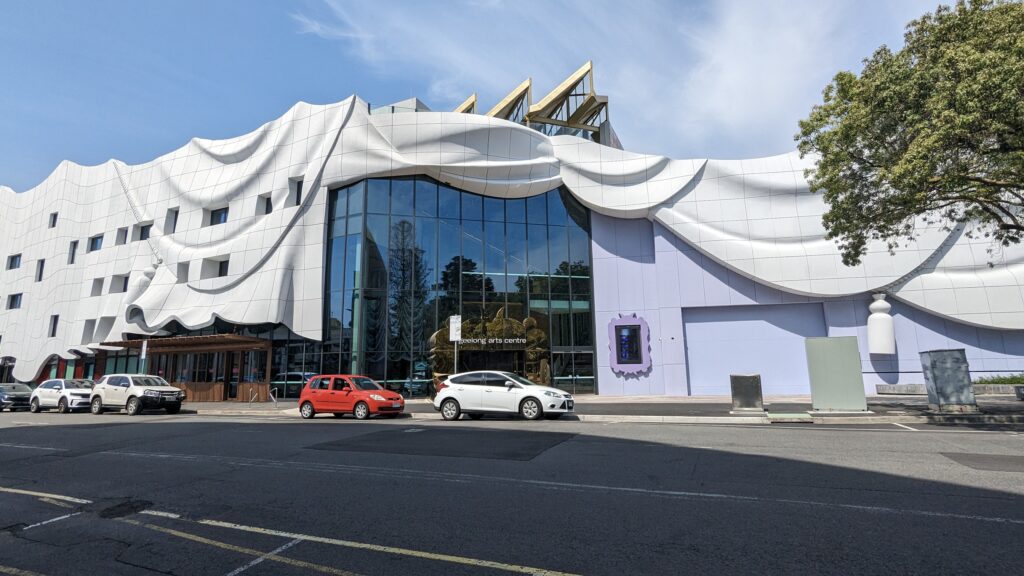
Next door to the Gallery, you’ll find the library and across the street you’ll see the engaging architecture of the Geelong Art Centre (50 Little Malop St, Geelong VIC 3220). With an active live performance season throughout the year, catch a comedy, a children’s show, or even physical and circus theatre.
A Vegetarian Place to Eat
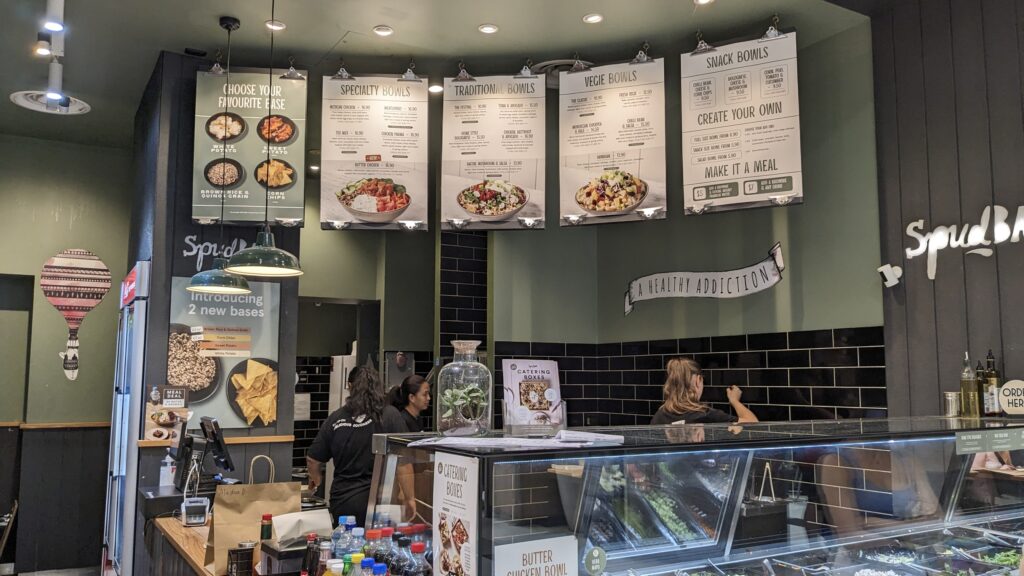
Head down Moorabool Street, passing the Westfield Mall (95 Malop St, Geelong VIC 3220). If you want a quick vegetarian bite, pop into the food court inside and grab a loaded potato at the delicious and affordable Spud Bar. The mall was redeveloped from a set of original buildings, including Strachan Murray and Shannon woolstores, the Melbourne Electric Supply Company and the Geelong Power Company. You can still see their presence in the facades of the buildings.
The Wool Museum
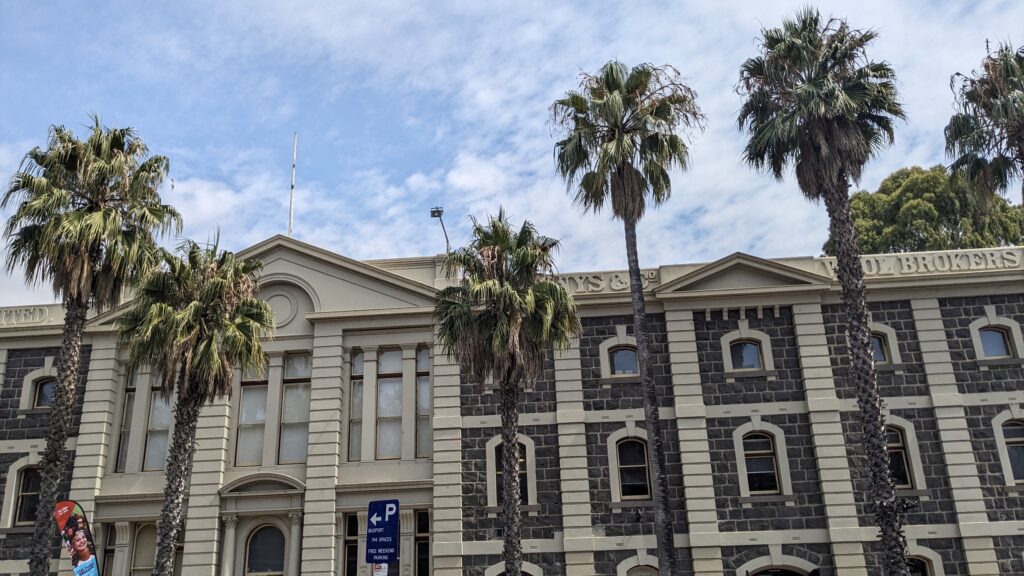
Continuing along Malop Street, you’ll find the National Wool Museum opposite the mall, and housed in the old CJ Dennys & Co Woolstore. Sheep farming began here in 1835 and the first of many woollen mills opened here in 1868. For many years the city was known as the “wool centre of the world.” Station owners and workers would haul wool into Geelong for the market, get paid, then spend their money in the city.
The Wool Museum costs $12 for adults. Be sure to stop in and see the amazing wagga quilt collection and the history of the wagga culture in Australia.
Lose Your Head in Geelong

Diagonal from the museum on the corner of Moorabool and Brougham, you can find a statue of Albert Edward, Prince of Wales (King Edward VII). The statue originally came from a suite of four English royalty pieces commissioned by Sir William Clarke in 1877 and sculpted by Charles Summers. It moved about the city of Geelong, ultimately losing its head in a sprint of vandalism. The head was refashioned, attached, and the statue moved to its current location. On its unveiling in 2014, many locals felt the Prince’s head was too big and out of proportion. What do you think?
Sailing North in Geelong
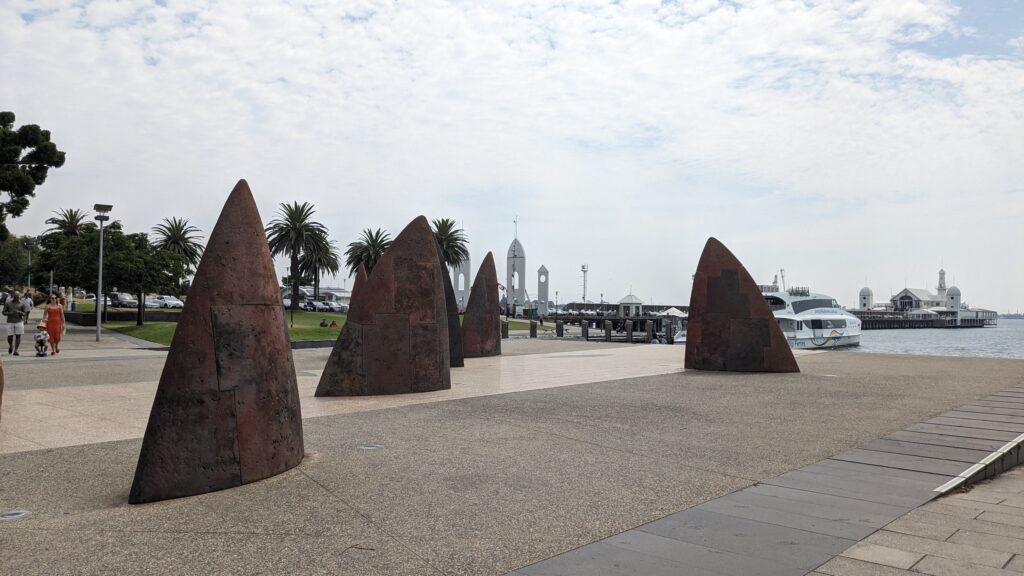
Continue towards Corio Bay and eye the sail sculpture called North. North by artist Mark Stoner (2000) consists of seven cement objects resembling sails or fins that vary in size from 2.2 to 3.5 meters high. No two fins are positioned on the same plane, and by moving within and around the sculpture the profiles change quite dramatically.
The Geelong Bollards
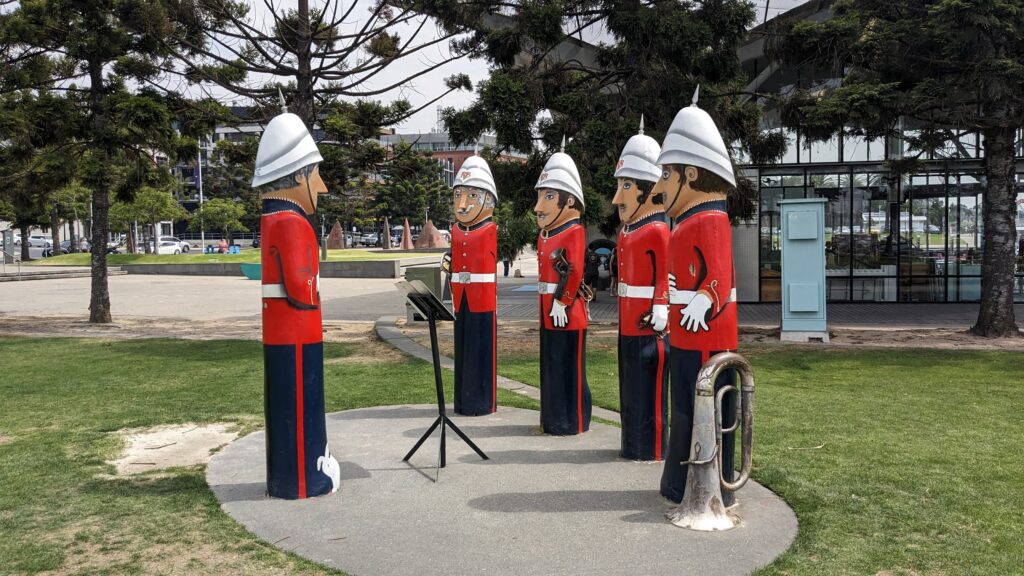
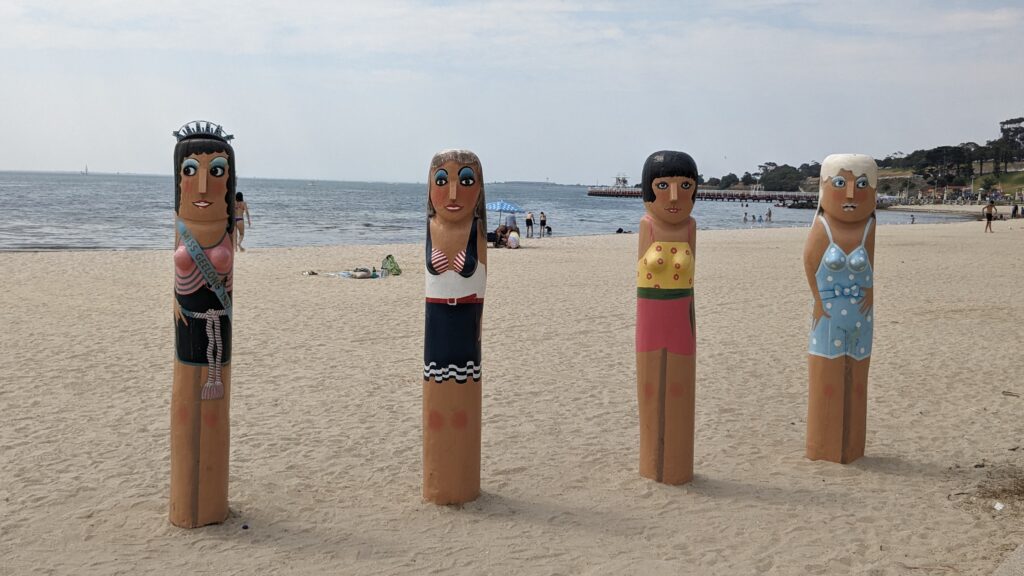
Turn right and continue along the foreshore. Walking in Geelong is a great way to see your first set of the famous Geelong bollards, an art project commissioned Jan Mitchell in the 1980s to use recycled timbers creatively. More than 100 sculptured bollards are installed around the Geelong waterfront. The much-photographed and beloved bollards chronicle characters from the city’s past and present, including dapper young ladies in neck-to-knee bathing costumes, 1930s lifesavers, a Geelong footballer, jaunty sailors, fishermen and a town band.
The Geelong Carousel
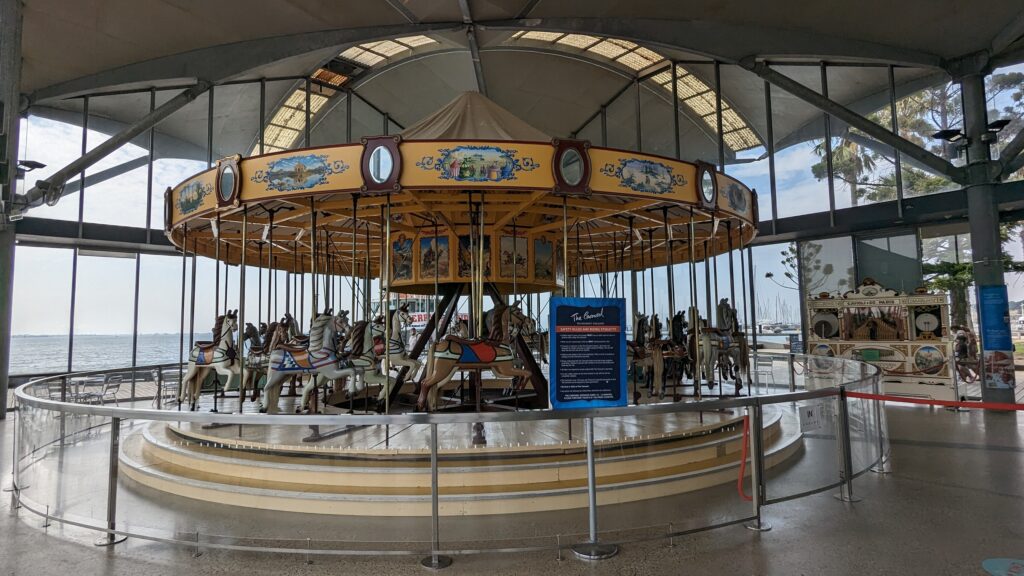
Pass by the Geelong Carousel. The Armitage-Herschell portable steam driven, hand-carved wooden carousel was constructed circa 1892 and is one of only 200 in operation around the world. Featuring 36 Dare horses and 2 chariots, it was purchased by the Steampacket Place Development Board in 1996 and painstakingly restored.
The Geelong Buoys

Continue along the foreshore, passing by the giant original buoys of Corio Bay. You’ll also pass several sets of bollards, including a marching band, life savers, and typical workers of the waterfront.
The Largest Ferris Wheel in the Southern Hemisphere
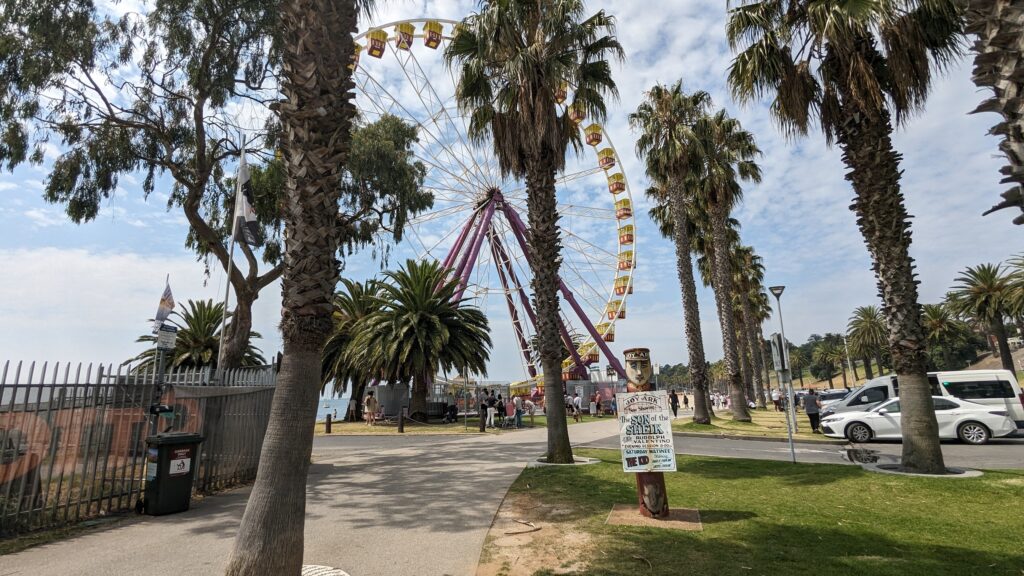
The Giant Sky Wheel (31 Eastern Beach Rd, Geelong VIC 3220) loops over the foreshore. Hop a ride on the largest ferris wheel in the southern hemisphere for $10 adults. For fun, see if you can walk from there back to the Carousel in less than 37 seconds. If you do, you’ll beat World Champion and local Geelonger, Nathan Deakes. He holds the record for fastest walker in the 2006 50 km Australian Race Walker Championship.
Eastern Beach in Geelong

Eastern Beach is ahead, where you’ll find a pavilion, restrooms, and an entertaining waterfront of piers, stands, and diving platforms. Don your swimmers and bathers and jump into the fun. Once you dry off, head up the grand staircase. At halfway, turn around and take a great photo of the four stork fountain and the beach. (The original storks and tortoises are in the nearby Botanic Gardens.)
A Cast Iron Villa in Geelong
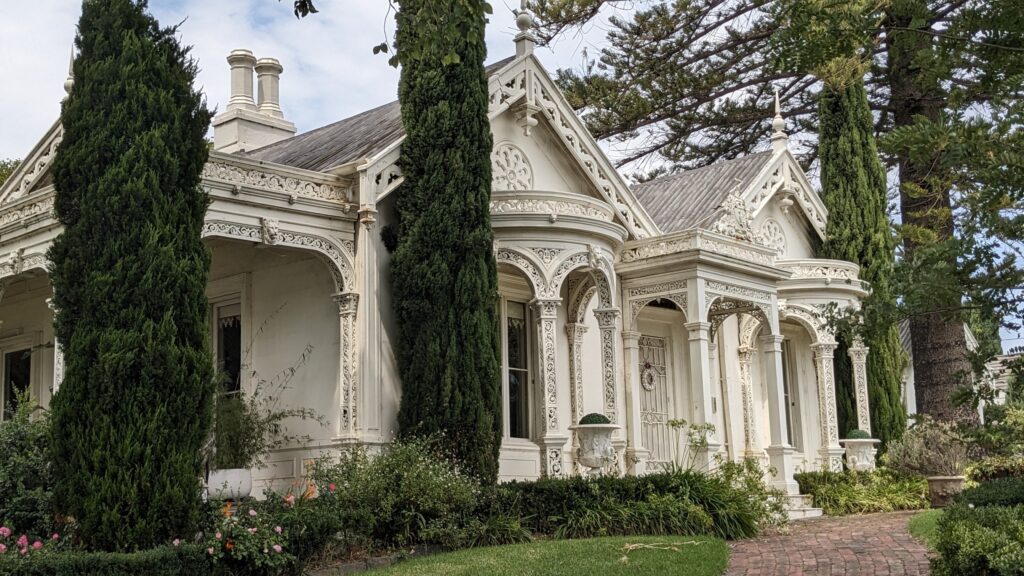
At the top of the stairs, go to the right for a block and you’ll come across the Corio Villa (56 Eastern Beach Road, Geelong). Originally made in Scotland of cast iron, it was shipped to Geelong where it sat on the docks for months. The plans were missing. Alfred Douglas, a wealthy wool merchant and one time owner of the Geelong Advertiser, bought the crates and built the house without much of a plan. An extension in the 1890’s saw several weatherboard rooms blend in perfectly to the eastern side of the cast iron building.
The Geelong Botanic Gardens
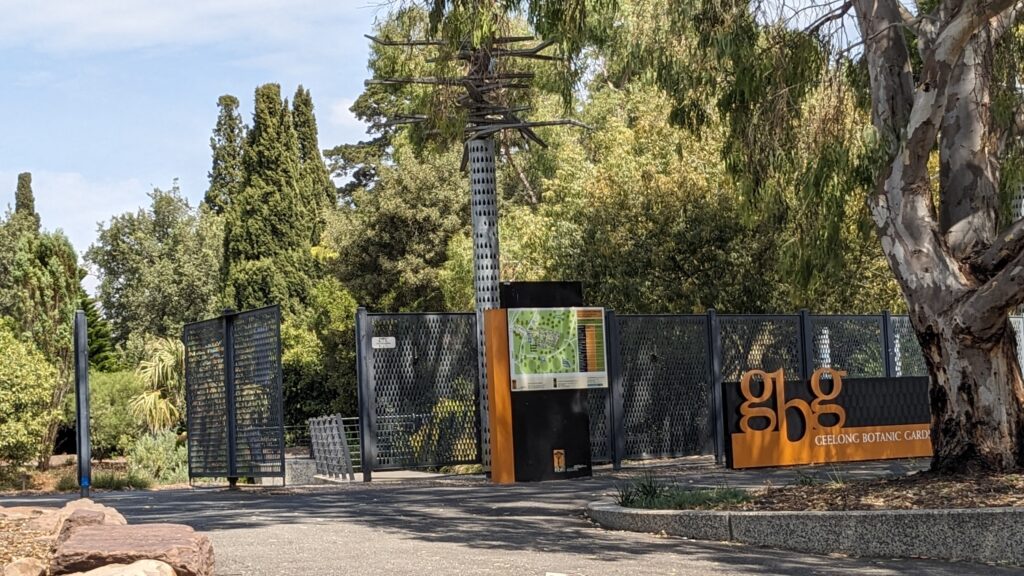
Return past the stairs from whence you came and on toward the Geelong Botanic Gardens (Corner of Eastern Park Circuit &, Podbury Dr, East Geelong VIC 3219.) This free gardens, originally opened in the 1850s, has a fabulous heritage garden and a 21st garden. It’s a super working example of how to use water effectively to grow beautiful gardens in this day and age of drought and water shortages. When you finish your walk, enjoy a nice tea in the Gardens Tea House.

Chris Englert, the Walking Traveler, believes walking is the platform for life. Wanderlusting since the age of 5, she’s since traveled all 50 US states and 62 countries. Chris shares her love of walking while traveling via blogs, books, and presentations. A natural storyteller, she invites you along as she explores the world, one walk at a time.
Currently, Chris and her husband, Steve, travel the world, full-time as nomads, with just their two carry-ons. They’ve been traveling since May, 2021.